
Vending Machines For Offices & Workplaces
Break rooms, lobbies and staff areas run around the clock. A machine keeps drinks, snacks and small essentials available without a staffed shop — and without a cash float.
What A Machine Solves In An Office
Facilities teams raise these four points before a workplace project starts.
The Day Does Not Stop At Lunch
People work late, arrive early and skip breaks — a machine keeps drinks and snacks available through the whole day.
No Cash, No Reconciliation
Payment can be configured cashless, so nobody collects, counts or reconciles cash across a site.
Small Essentials, In Reach
Snacks, chilled drinks and everyday personal items can sit in a cabinet instead of a trip to the nearest shop.
A Workplace That Looks After Its People
The cabinet finish, front panel and screen can carry your branding — a considered amenity rather than a generic machine.
What A Machine Adds To A Workplace
In an office a machine is rarely judged as a profit centre. It is judged on the minutes it gives back and the amenity it provides.
Two buying models are common, and they change the arithmetic. A workplace can buy the cabinet outright and run it as an amenity, or work with a local operator who places and restocks the machine. Decide which one you are before the specification is fixed, because it changes who pays for restocking and payment fees.
Where the site buys the machine itself, the case is usually made on time rather than on sales:
- Count the minutes an employee spends leaving the building for a drink or a snack, and how often that happens in a week.
- Multiply by the headcount on site, then by the loaded hourly cost. That is the figure a facilities or HR budget is normally argued with.
- Against it, set the cabinet price, electricity, payment fees and the minutes spent restocking.
We do not publish a payback period, because it depends on your headcount, your prices and whether you restock in-house. We do publish the capacity, the power draw and the full specification, so the comparison can be made on real figures.
Which Machines Fit A Workplace
All five models are built to order. For a workplace, these four are the usual starting points.
Beverage — Refrigerated
Chilled drinks for break rooms and lobby areas: ten lanes a tier, 2–16 °C.
Drinks
High Capacity
Snacks and drinks together for a site with hundreds of people on shift: 360 canned drinks across six tiers of ten lanes.
High footfall
Ambient Cabinet — 21.5 in
Snacks, personal care and everyday essentials that do not need chilling. The same cabinet, configured to your stock at order.
Snacks & essentials
Wall-Mounted
Almost no floor footprint — corridors and compact break areas.
Tight spaces
Product compliance: the rules that apply to the products themselves — including labelling — sit with whoever places them on the market. Buyers are responsible for confirming that the products they vend meet the requirements of their market.
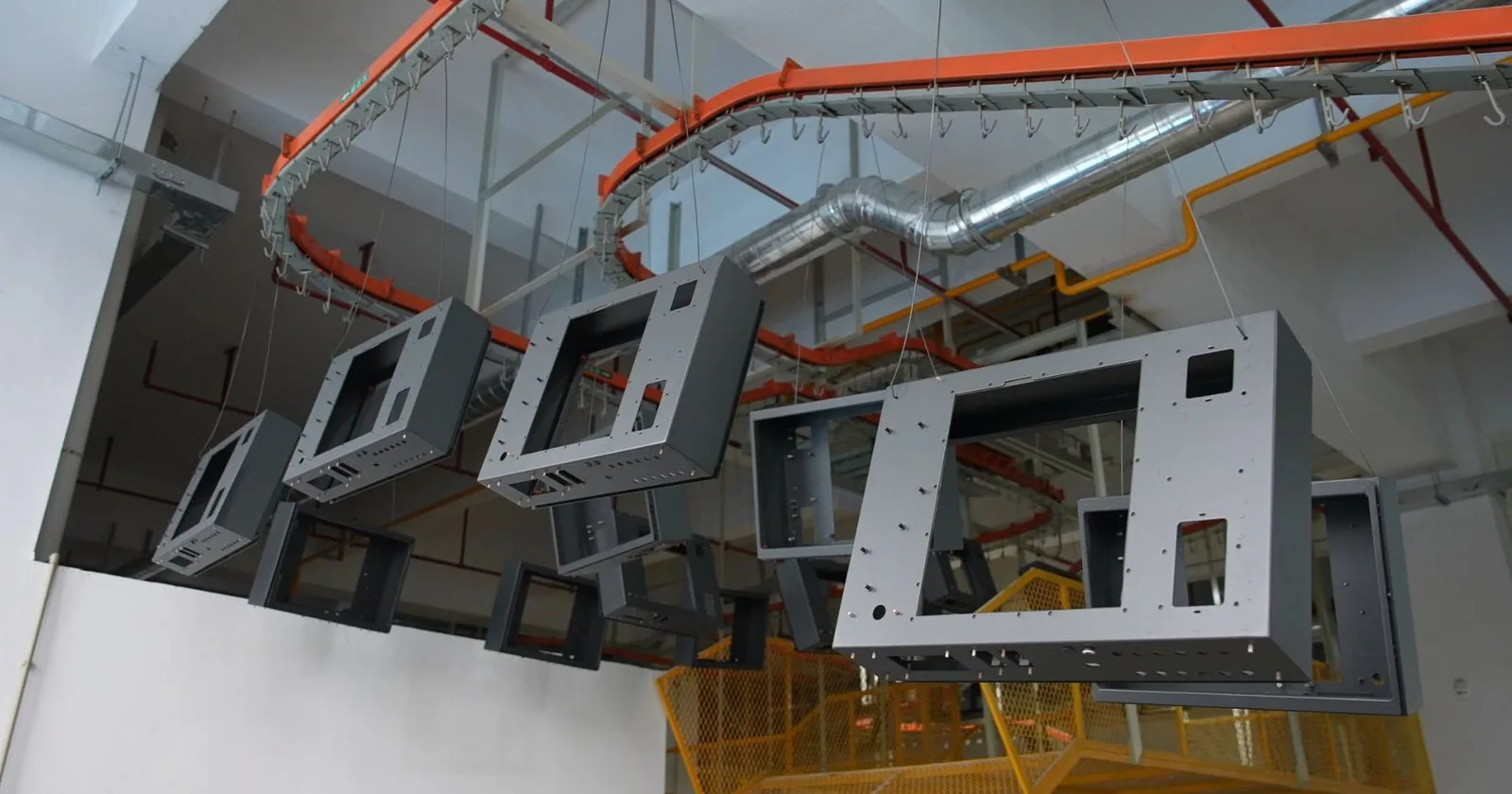
Built Around The Workplace, Not Around A Catalogue
Capacity, shelving layout, screen interface, branding and payment are set per project. Every cabinet is made, assembled and tested in our own plant in Foshan before it ships.
- Workplace typeOffice, campus, plant or co-working space
- Headcount on siteSo the capacity recommendation fits the traffic
- Country of installationSo we can match the configuration to your market
- Estimated quantityA pilot unit or a rollout
Which Cabinet Fits Which Situation
Most workplace projects come down to one of these four. If yours is not here, tell us about the site and we will say which way we would go.
If
there is one break room and a headcount in the low hundreds,
take the refrigerated drinks cabinet: drinks on ten lanes a tier, 2–16 °C.
If
the site runs over several floors,
put a wall-mounted panel on each floor, or one high-capacity cabinet in the main pantry — one restocking point instead of four.
If
snacks and drinks sell side by side,
take the high-capacity combined cabinet: 360 canned drinks across six tiers of ten lanes.
If
the site runs shifts through the night,
specify cashless payment and a cabinet that needs no staff at all — card and contactless are the standard build.
Which Cabinet Fits Which Workplace
Start from the situation, not the model number. The three columns below use the figures from each datasheet, so the choice can be checked rather than trusted.
| Situation | Start with | Why it fits |
|---|---|---|
| Drinks for one floor or one site | SBD-C/002 | 300 cans at 2–16 °C; 1,180 mm wide, 1,980 mm tall. |
| Several hundred staff, one canteen or lobby | SBD-C/001 | 360 cans, 1,390 mm wide, 21.5-inch screen. |
| A kitchen or breakout wall, floor kept clear | SPA-A/001 | 250 mm deep, 45.5 kg, wall-mounted instead of floor-standing. |
| PPE, IT accessories or branded items instead of drinks | SBA-A/001 | Ambient, 6 tiers × 10 lanes, 21.5-inch screen. |
| One machine for several floors | SBD-C/001 | More capacity per refill — but the limit is who walks past it, not the cabinet. |
Send the room or staff count, the items you want to sell and one photo of the space. Two options come back, with the lane layout drawn for your pack sizes.
Five Things That Go Wrong In A Workplace Install
None of these is a machine problem. They are decisions taken too late.
Counting staff instead of footfall
Headcount is not traffic. The machine sells to the people who walk past it, at the hours they walk past.
One machine for every floor
A single unit on the ground floor will not serve the fourth. Either add units or accept that the range serves one zone.
Assuming power and network are settled
AC110–240 V covers the supply, but the socket position, the circuit and the site connection are decided on site, before delivery day.
Fixing the layout after production
Lane count and spring spacing are set at order, so the product list has to be known when the order is placed.
Nobody owning the refill
Who refills it, how often, and with what? A cabinet without a named refill owner is empty within a month — and an empty machine stops selling.
Six Things To Confirm Before You Order
Each of these is easier to settle before production than after the cabinet has been delivered.
A power point and a spare circuit
Tell us the socket type and where it sits. A refrigerated cabinet draws more than an ambient one, so the circuit should be checked, not assumed.
The delivery route and the lift
Measure the door and the lift before ordering. A cabinet that fits the pantry is no use if it cannot get up the stairs.
Floor loading
A loaded cabinet is heavy. On an upper floor or a raised floor, confirm the load with the building manager.
Who restocks it, and when
In-house facilities team or a local operator — both are common. Whoever it is needs access at an agreed time, and the layout can follow their route.
Payment method and policy
Cash, card, contactless or QR. Some sites go cashless for reconciliation reasons; decide before production, not after.
Ventilation around the cabinet
A refrigerated cabinet needs air at the back. Do not box it into a closed cupboard or push it flush against a wall.
Questions Facilities Teams Ask Before Ordering
Which machine suits an office?
It depends on the headcount and where it stands. One break room usually takes a refrigerated drinks cabinet; a site with several floors is often better served by wall-mounted panels or one high-capacity cabinet in the main pantry.
How many people does one machine serve?
There is no fixed ratio. It depends on shift patterns, how far the nearest shop is and how often the cabinet is restocked. Most workplaces start with one cabinet in the main break area and add a second only when it sells out between restocks.
Do employees need cash?
No. Card and contactless are the standard build, and cash can be included or left out. The payment hardware is selected for your country at order stage.
Can it carry our company branding?
Yes. The cabinet colour, front panel and on-screen interface can carry your branding, including a welcome screen and your own product descriptions.
Where is it usually installed?
Break rooms, pantries, lobbies and corridors. Tell us the spot and we will confirm the cabinet size, the door swing and the power point required.
Who restocks it?
Either your facilities team or a local operator who runs the machine for you. Both are common; the cabinet is the same, but who buys it and who restocks it is decided between you and the operator.
What is the lead time?
It depends on the model, the configuration and the shipping route, so it is set out in your quotation rather than published as a single figure.
What happens after delivery?
Spare parts are dispatched from the same plant that built the cabinet, and faults are diagnosed remotely first. The cover, response times and parts terms are set out on our after-sales page.
Planning A Machine For A Workplace?
Tell us the workplace type, the headcount and the country of installation. We will come back with the cabinet that fits and a quotation.
vizingsmart
From Steel To Vending Machine
We design, engineer and manufacture vending machines in our own production plant — from steel fabrication and surface treatment to assembly and final testing.
Products
Solutions
Contact
Send your specification through our enquiry form — we reply within one working day.
Foshan, Guangdong, China
Trading Cards · Beverage · Age-Verified · Wall-Mounted